
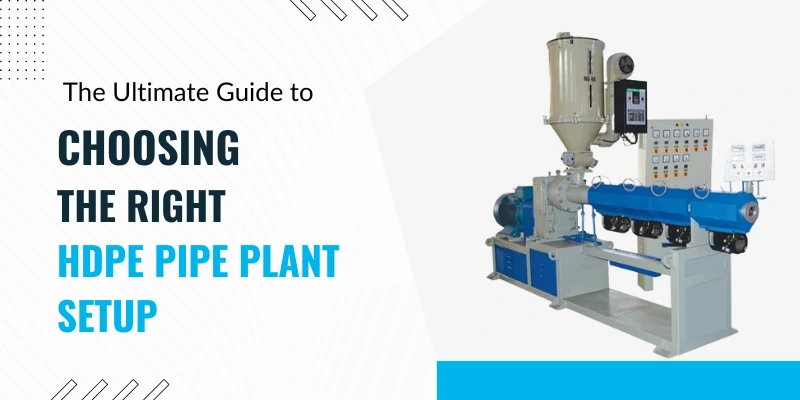
Setting up an HDPE (High-Density Polyethylene) pipe plant is a significant investment. Choosing the right plant setup is crucial to ensure efficiency, cost-effectiveness, and long-term success. If you are planning to start or expand your HDPE pipe manufacturing business, here’s a step-by-step guide to selecting the right plant setup.
1. Understand Your Business Requirements
Before choosing an HDPE pipe plant, you need to assess your business goals and production requirements. Consider factors such as:
- The types and sizes of HDPE pipes you plan to manufacture
- The expected production capacity
- The target market and demand for HDPE pipes
- Budget constraints and financial planning
Clearly defining these aspects will help you select the right equipment and infrastructure for your plant.
2. Choose the Right Extrusion Machine
The extrusion machine is the heart of an HDPE pipe plant. It melts and shapes raw plastic into pipes. When selecting an extrusion machine, consider:
- Screw Type: Single screw extruders are cost-effective and suitable for basic applications, while twin screw extruders offer better mixing and higher output.
- Output Capacity: Choose a machine that matches your production volume.
- Energy Efficiency: Opt for machines with lower power consumption to reduce operational costs.
- Automation Features: Automated controls enhance precision, reduce waste, and improve efficiency.
3. Select High-Quality Molds and Dies
Molds and dies determine the shape and size of the pipes. High-quality molds ensure uniform pipe thickness and durability. Consider:
- Compatibility with different pipe sizes
- Ease of maintenance and replacement
- Material quality to withstand high temperatures and pressure
4. Invest in Cooling and Sizing Equipment
Once the pipes are extruded, they need to be cooled and sized properly. Cooling systems use water baths or air cooling methods to harden the pipes. Sizing units ensure uniform diameter and thickness. Key considerations include:
- Cooling speed: Faster cooling improves production rates.
- Precision: Accurate sizing enhances product quality.
- Material Durability: Corrosion-resistant cooling tanks and sizing units ensure long-term performance.
5. Consider Haul-Off and Cutting Machines
A haul-off machine pulls the extruded pipe at a controlled speed to maintain uniformity, while a cutting machine trims pipes to the required length. Look for:
- Adjustable speed settings for different pipe sizes
- Precision cutting mechanisms to ensure clean and accurate cuts
- Low maintenance and high durability
6. Opt for Quality Raw Materials
The quality of HDPE pipes depends largely on the raw materials used. Choose suppliers who provide high-grade polyethylene resins with:
- High strength and durability
- Resistance to chemicals and environmental factors
- Consistency in quality to ensure uniform production
7. Ensure Efficient Power and Water Supply
HDPE pipe plants require a stable power supply to run extrusion machines, cooling systems, and other equipment. Additionally, an adequate water supply is essential for cooling processes. Consider:
- Backup power options (such as generators) to prevent downtime
- Efficient water recycling systems to reduce wastage and costs
- Proper drainage and water treatment facilities
8. Plan for Storage and Logistics
A well-organized storage and logistics system ensures smooth operations. Consider:
- Raw Material Storage: Proper storage for HDPE resin to prevent contamination
- Finished Product Storage: Adequate space to store pipes before distribution
- Transportation Needs: Efficient logistics for delivering pipes to customers
9. Check Compliance and Certifications
Ensure that your HDPE pipe plant complies with industry regulations and standards. Look for:
- Certification requirements (ISO, BIS, ASTM, etc.)
- Environmental regulations and waste management policies
- Safety standards for workers and equipment
10. Choose a Reliable HDPE Pipe Plant Manufacturer
Selecting a trusted manufacturer for your HDPE pipe plant equipment is crucial. Consider:
- Industry experience and reputation
- Customer reviews and testimonials
- After-sales support, including maintenance and spare parts availability
- Training and technical assistance provided
Conclusion
Choosing the right HDPE pipe plant setup requires careful planning and consideration of various factors such as production needs, equipment quality, power supply, and compliance requirements. By investing in the right machinery and infrastructure, you can ensure a smooth and profitable operation. A well-planned HDPE pipe manufacturing plant will help you meet market demand, reduce production costs, and deliver high-quality products consistently.