
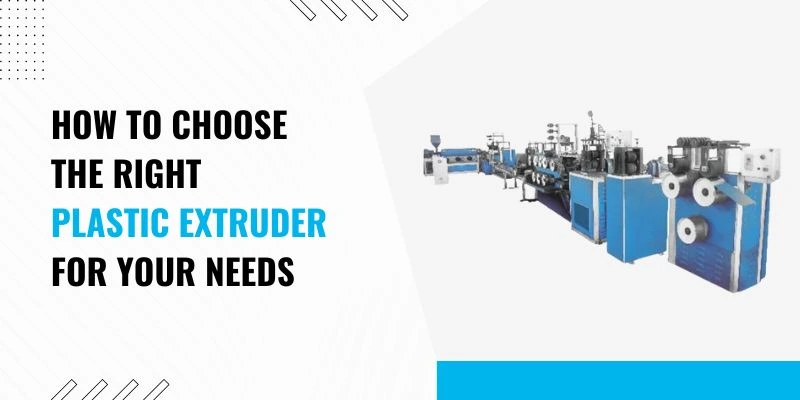
Plastic extrusion is a key process in manufacturing various plastic products, from pipes and sheets to films and profiles. Choosing the right plastic extruder is crucial for ensuring high-quality output, efficiency, and cost-effectiveness. If you are planning to invest in a plastic extruder, understanding your needs and the different types of machines available can help you make an informed decision.
Understanding Plastic Extruders
A plastic extruder is a machine that melts raw plastic material and forces it through a shaped die to create continuous forms like tubes, sheets, or filaments. It consists of a hopper, barrel, screw mechanism, and die head. The extruder type you choose depends on the material you process, the required product, and the production volume.
Factors to Consider When Choosing a Plastic Extruder
1. Type of Extruder
There are different types of plastic extruders, each suited for specific applications:
Single-Screw Extruder: Ideal for simple plastic processing applications, such as making pipes and sheets. It is cost-effective and easy to operate.
Twin-Screw Extruder: Suitable for complex plastic formulations, such as compounding and mixing materials. It provides better control over output quality and consistency.
Choosing the right type depends on the complexity of your production process and the plastic materials you work with.
2. Type of Plastic Material
Different plastics require different extrusion methods. Consider whether your extruder needs to handle materials like:
- Thermoplastics (e.g., PVC, PET, PE, PP) that can be melted and reshaped multiple times.
- Thermosetting Plastics that harden permanently and require specialized processing.
- Recycled Plastics, which may need additional filtration and processing capabilities.
Selecting an extruder that matches your material type ensures efficiency and product quality.
3. Production Capacity
Your production volume determines the extruder size and capacity.
- Low-volume production: A smaller single-screw extruder may be sufficient.
- High-volume production: A twin-screw extruder with a larger processing capacity will be more efficient.
- Customization needs: If you produce various products, an extruder with interchangeable dies and flexible settings is beneficial.
4. Die Design and Output Requirements
The die determines the shape and quality of the final product. Different products require different dies, such as:
- Sheet Dies for producing plastic sheets.
- Pipe and Profile Dies for manufacturing tubes and window frames.
- Blown Film Dies for making plastic films.
Ensure that the extruder you choose supports the necessary die designs for your specific products.
5. Energy Efficiency and Automation
The amount of energy used plays a big role in overall running costs. Look for extruders with energy-saving features, such as:
- Variable frequency drives (VFDs) to optimize power usage.
- Efficient heating and cooling systems to maintain stable processing temperatures.
- Automation and control systems that enhance accuracy and reduce manual intervention.
Investing in an energy-efficient extruder can significantly reduce long-term operational expenses.
6. After-Sales Support and Maintenance
A reliable extruder requires proper maintenance and technical support. Consider:
- Availability of spare parts to prevent downtime.
- Technical support and training provided by the manufacturer.
- Ease of maintenance, including cleaning and replacing components.
Choosing a trusted plastic extruder machine manufacturer ensures you get quality equipment with reliable after-sales support.
7. Cost and Budget
Extruders vary widely in price depending on their type, capacity, and features. It might be tempting to choose the cheapest option, but it’s important to consider:
- Initial investment vs. long-term cost savings (energy efficiency, durability, and maintenance needs).
- Return on investment (ROI) based on production efficiency and output quality.
- Financing options offered by extrusion machine suppliers to ease upfront costs.
Finding the right balance between cost and quality helps you get the most value for your money.
Final Thoughts
Choosing the right plastic extruder involves evaluating factors like material type, production capacity, die design, energy efficiency, and budget. Partnering with reputable plastic extrusion machine manufacturers ensures superior product quality, reduced downtime, and seamless production operations. Take the time to research and compare different options to find an extruder that meets your specific production needs. Investing in the right machine will not only boost productivity but also enhance the overall efficiency of your plastic manufacturing process.